Jensen Jiang

Research
My research examines the political economy of authoritarian regimes, with a focus on China. I study how state institutions governing internal migration and access to higher education shape public opinion, social inequality, and regime stability. To address these questions, I draw on formal theoretical models alongside quantitative empirical methods, including survey data analysis and causal inference designs.
Working Papers
Abstract: Hukou system in China is a mandatory registration scheme that ties access to social benefits with registration address, and prevents rural-to-urban migration. In 2014, the State Council in China introduced differentiated hukou policies across cities by population size, relaxing most hukou requirements in cities with a population of less than three million. Using a two-way fixed-effects difference-in-differences design model, this paper analyses the China Migrants Dynamic Survey (CMDS) data to examine whether the reform raised migrants' willingness to settle in small and medium cities. Following the reform, migrants report a 5 percentage point increase in willingness to reside in small and medium cities in the long term, after controlling for individual characteristics and year and city fixed effects. This settlement effect concentrates in cities below 3 million, where the reform granted full relaxation of registration requirements. The findings suggest that loosening residential barriers can redirect long-run migration flows away from megacities, with direct implications for China's urban-rural integration and economic policies.
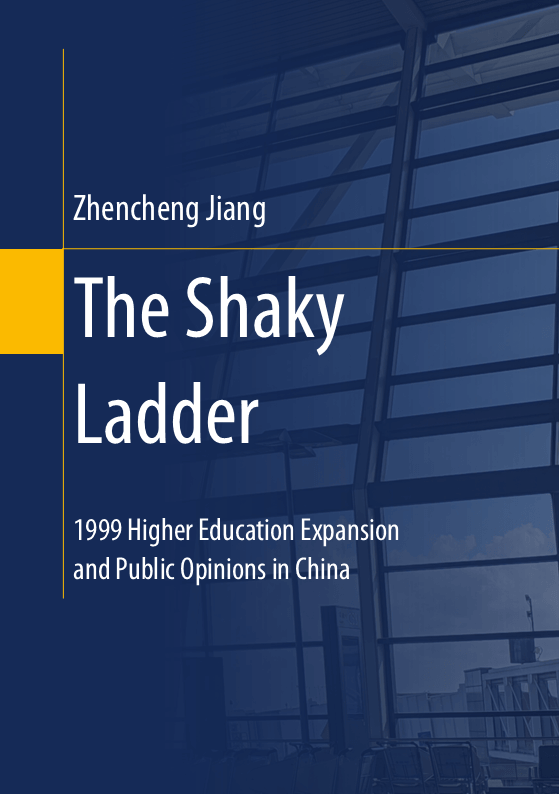
Abstract: In recent decades, autocratic regimes have transformed elite higher education systems into public higher education systems. For instance, in 1999, the Chinese government sharply increased total university admissions by nearly 50%. How could the regime maintain political stability while expanding higher education? Several researchers believe that two main factors foster political stability and loyalty to the regime: indoctrination and the upward social mobility effect. In this article, I argue that the 1999 higher education expansion did not promote social mobility in Chinese society, which counteracted the positive indoctrination effect on support for the Chinese government. By applying a difference-in-difference design, I examined the effect of the 1999 higher education expansion on public support for the government, individual income levels, social status, and opinions on corruption and inequality. The results show that the education expansion failed to enhance loyalty to the authoritarian regime. Following the university expansion, the total income of individuals affected by the education reform did not increase. The significant disparity between expected and actual social status resulted in negative judgments about social mobility and equality in Chinese society. Furthermore, as corruption and social inequality have become crucial issues raising public awareness, the 1999 reform did not influence public opinions on these matters. These factors led to an overall null effect of the 1999 education expansion on public opinion in China.
Abstract: Over the last 20 years after the 1999 higher education expansion, the total number of higher education enrolments has increased sharply. With a higher probability of receiving tertiary education, multiple social and demographic groups are benefiting from the 1999 reform and subsequent college premiums in the job market. However, the impact of the 1999 expansion on income inequality and mobility between these groups is still yet to be examined. Using the Chinese General Social Survey (2021) cross-sectional data and a fuzzy regression discontinuity design (RDD), we found that the 1999 higher education expansion encouraged social mobility and educational equality in China where both composition and equalization effects exist. College premium has significantly dropped after the reform but is still a substantial factor when determining wages. With a higher probability of attending universities, citizens from minority ethnic groups and from rural areas generally benefited from the 1999 reform. However, despite the rises of female education levels, the gender wage gap continues to widen after 1999 reform due to systematic discrimination against female workers on the job market. And nevertheless, family background has an unignorable role in determining education levels and a significant impact on future income.
Work in Progress
- Necessary Solutions: 2014 Hukou Reform and Political Attitudes in China
- Contingent Contract: A Model of Internal Migration in Authoritarian Regimes